Aberpergwm FAQs & Action for local residents
Aberpergwm: Live locally? Get informed & active
Energybuild hasn't kept local people in the loop...
... So we thought we would!
Volunteers from Neath Port Talbot Friends of the Earth have given out flyers in Glynneath to start conversations and direct people towards this information about the mine expansion, and about how you can take action as people living near Aberpergwm.
What is happening with Aberpergwm?
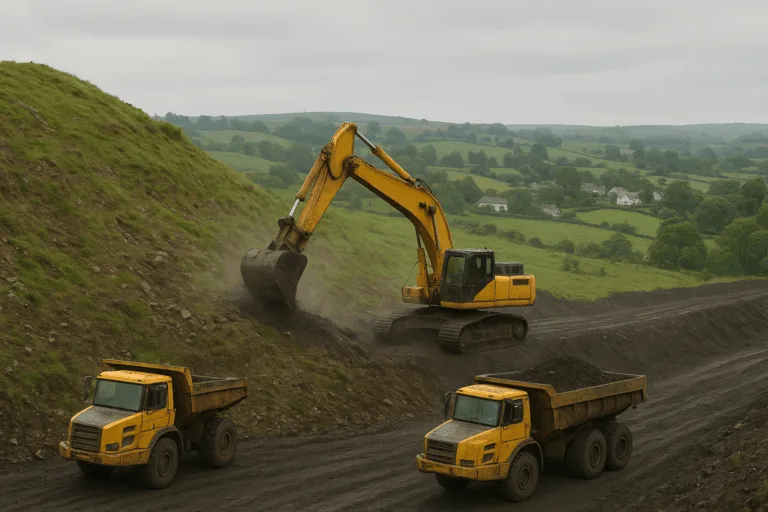
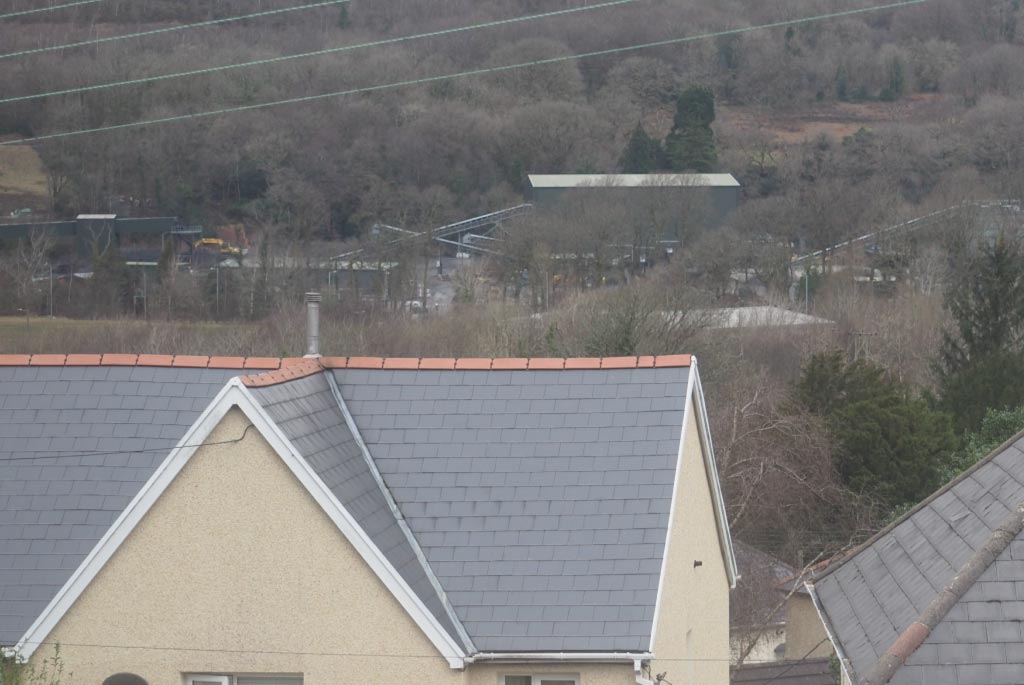
Aberpergwm has permission to extract over 40 million tonnes of coal over 18 years: 2.33 million per year. The mine is set to expand under Seven Sisters , Treforgan and Crynant and up to Varteg Hill to the West.
Why is the mine being debated?
According to legal advice received by the Coal Action Network, the Welsh Government should have intervened to stop the mine AND the Coal Authority could have taken the mine's climate change impacts into account before granting it permission. As a result the mine is up for debate in court.
Allowing the mine contradicts both the UK and Wales' climate commitments, the Wales Future Generations Act and the Welsh Planning Policy Framework
How will it impact the local environment?
- 100 x increase on the current levels of coal production at Aberpergwm if it reaches the goals set out in the application.[2]
This increase would mean:
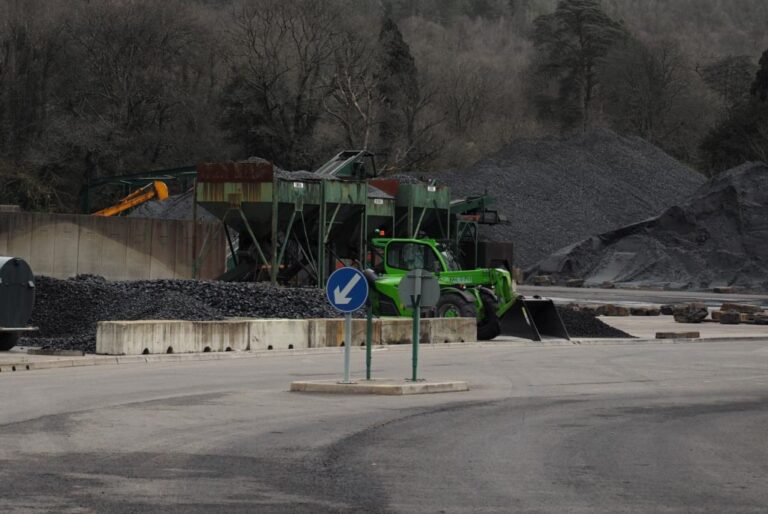
- Up to 237 lorry movements per day on the main road, turning right past the GP practice
- Up to 95,000 tonnes of waste per year on the tip overlooking Cwmgrwach
Will this really bring the jobs the area needs?
There are no plans to increase the number of jobs.
Jobs that are promised are precarious because...
- Energybuild says 60% of coal will go to Tata steel [6](former employees say it is closer to 90%), and...
- Tata will have to transition away from coal to survive and save jobs. Wales legally has to cut it's emissions by 63% by 2030 and Tata is Wales biggest single-site source of emissions [7]
- Whatever the future of Tata steel it does not include coal from Aberpergwm. This is not a safe bet for the area's future employment
- Most of the employment is not from the locality, but people travelling from further afield (according to former mine employees) so it is already not a solution to local unemployment.
Isn't the coal going mainly to water filtration?
No.
The company paint a picture of an expanding global market for their coal for water filtration, securing jobs into the future.
But the quality of the coal in this seam makes it unsuitable for water filtration as the company claim [8]. The nine foot coal seam in this area has a lower carbon content than that needed for water filtration [9]. So only a tiny percentage of the coal, if anything, can be used for this.
Instead Aberpergwm is predicated on the future of coal in steel production, which is not at all secure [10]
What does this mean for climate change?
Steelworks using coal are some of the UK's biggest polluters; Tata Neath Port Talbot is by far the biggest single site source of greenhouse gas emissions in Wales [11] and Aberpergwm proposes to continue contributing to that for another 20 years
Meanwhile, scientists agree that no new coal can be extracted anywhere in the world if we are to stay below 1.5 degrees of warming [13] which is considered the safe limit for life on the planet.[14].
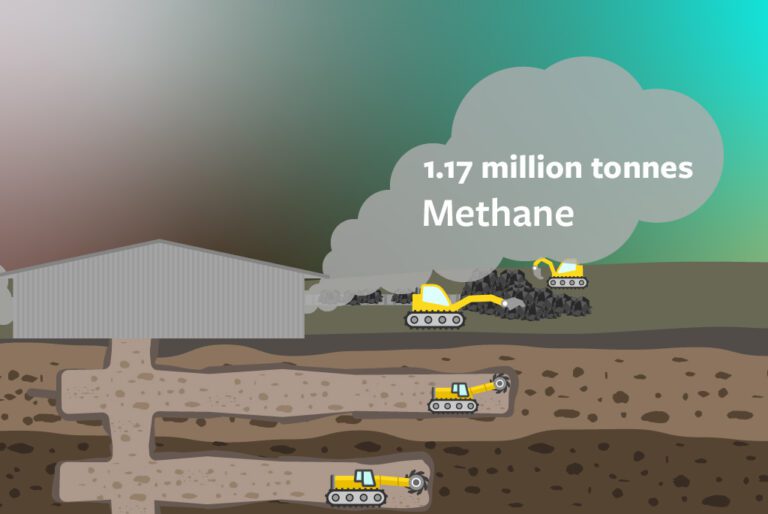
Furthermore, the coal in the mine is anthracite, which results in a high-methane producing operation. The 1.17 million tonnes of methane that would be released if this coal is to be mined would act quickly on the atmosphere, as methane is 80 times more powerful than CO2.[12]
Flooding events like those seen in the Neath Valley, and other catastrophic climate events globally are set to become more frequent if current levels of methane and greenhouse gas emissions are maintained
What are the alternatives for Neath Valley?
Local residents told The Guardian that the mine is "Not the future we should be going for".
Couldn't there be a long-term and green source of jobs for Glynneath, Cwmgwrach, Blaengwrach and the Neath Valley?
Blaengwrach resident Emma Eynons told CAN:
The communities in my local area have been suffering for many years with a lack of investment by the Welsh Government.
We live in an area of outstanding beauty, and of scientific interest, with so much wildlife and natural resource all around us. We would love to share our beautiful home with the rest of the world and establish a thriving community.
We want tourism, small business growth, regeneration plans which will mean real jobs with futures as we move forward. A community transport scheme would alleviate the social problems faced by our isolated residents
As a traditional mining community, of course we should celebrate our proud history of mining achievements. However, I would ask the Welsh Government to consider what the future of our communities should be.
How to take action
It's really easy to write to Lee Waters MP: Wales' Deputy Minister for Climate Change. The Welsh Government needs to hear personal letters from local residents and people in South Wales.
You don't have to say very much, you just need to show you care, and pick one or two facts or themes from this page in your own words. Three sentences are enough!
Steps to write to Lee Waters MS:
- Email to: correspondence.lee.waters@gov.wales
- (In the CC field add info@coalaction.org.uk if you'd like to be in touch with us too)
- Include "Aberpergwm" in the subject
- Introduce yourself and say where you live
- Say the main reason why you're against the mine and say a couple of sentences about that. Is it climate change? Do you have another vision for the local area? Is it the lorry movements? You can use any of the references at the bottom of this page
- Remind him that it is the Welsh Governments' responsibility to stop this mine.
- Ask Lee Waters to intervene and reject the mine.
Please send any replies you recieve to info@coalaction.org.uk
One last thing...
For the case against the mine to succeed we have to fund it! Please share our crowdfunder page
References
1Planning Application P2014/0729 Mining Zones Map (Neath Port Talbot Council planning portal)
[2]Coal Authority production statistics: 25666 (2019) 16957 (2020) 19690 (2021) tonnes was produced. Average 20,771 tonnes of coal.
[5]Planning Permission document P2014/0729 (7)
[6] Channel 4 News: https://www.channel4.com/news/are-cop26-promises-on-coal-being-broken (04.02.22)
[7] Wales carbon budgets/targets March 2021: https://gov.wales/climate-change-targets-and-carbon-budgets
[8] Core samples show 88.3% fixed carbon content https://orca.cardiff.ac.uk/115771/1/Zagorscak%20and%20Thomas%20(2018).pdf (126)
[9] In excess of 95% fixed carbon content: https://mineralmilling.com/anthracite-filter-media/
[10] Coal in Steel : Problems & Solutions (Coal Action Network)
[11] Wales carbon budgets/targets March 2021: https://gov.wales/climate-change-targets-and-carbon-budgets
[12]Channel 4 News report, research provided by Global Energy Monitor https://www.channel4.com/news/are-cop26-promises-on-coal-being-broken (04.02.22)