How global insurers compare on fossil fuels in 2022
How global insurers compare on fossil fuels in 2022
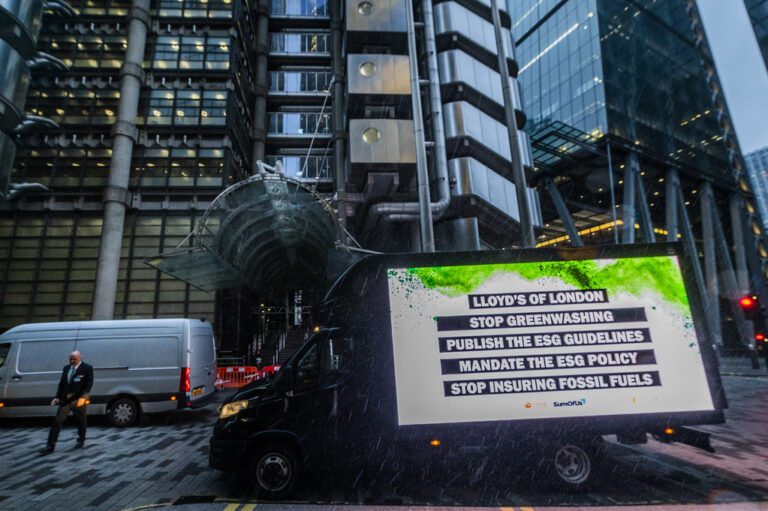
Insure our Future 2022 Scorecard is out
Analysing 30 leading primary insurers and reinsurers, assessing their policies on insuring and investing in coal, oil, gas, the 6th Annual Scorecard cuts through the greenwash and sorts the meanest from the greenest. The report highlights progress and loopholes, calls out leaders and laggards, and identifies challenges and opportunities for the year ahead.
Coal
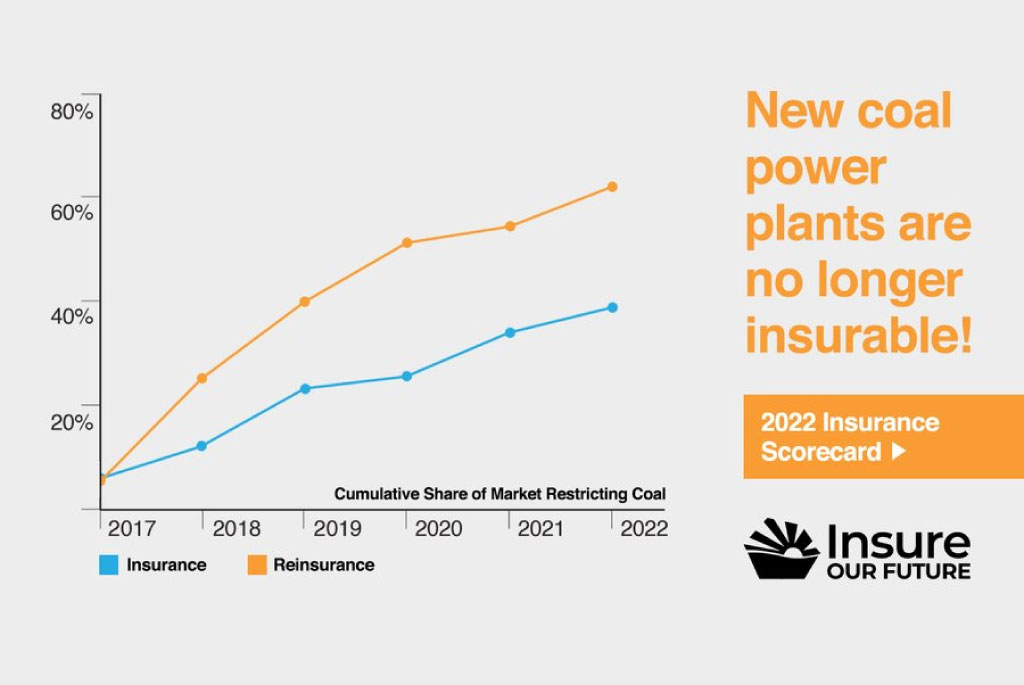
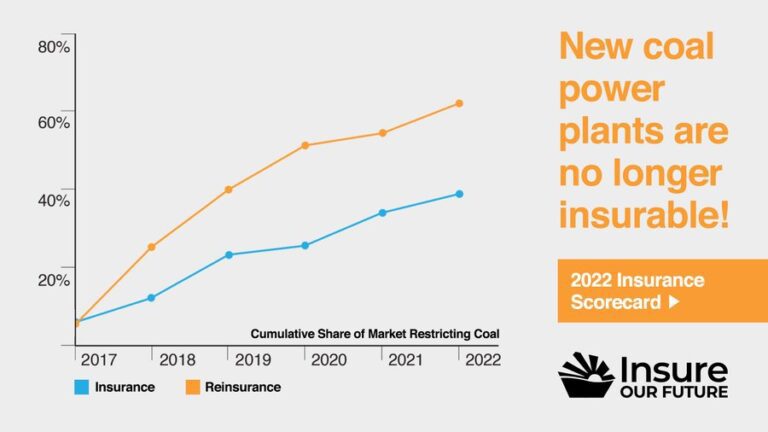
The number of coal exit policies has grown from 35 to 41 this past year, with major US insurers known for their role in fossil fuels AIG and Travelers finally getting on board. The market share of insurers with coal exclusions has reached 62% in the reinsurance and 39% in the primary insurance markets.
In terms of new power stations, this is good news: according to the report many of the key laggards that are continuing to underwrite new coal projects lack the capacity and expertise involved in insuring complex large-scale new coal power plants.
There is still a lot of work to do: many companies still have no policies excluding coal, and some of those that do extend only to power stations and thermal coal mines, not coking coal mines. Meanwhile Lloyds of London's coal exclusion guideleines are non-mandatory, and they take on 40% of the global energy market.
Oil & Gas
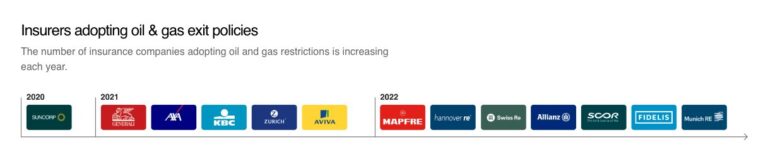
Insurance company restrictions on oil and gas are only just starting to catch up with those on coal. The new report shows 13 companies have adopted oil and gas restrictions, compared with 41 on coal.
Be it in the IPCC’s 1.5°C report, the IEA’s Net Zero Roadmap or the One Earth Climate Model, climate scientists are clear that there is no space for any new coal, oil or gas projects in credible pathways to limit global warming to 1.5°C. Yet most insurance companies have not taken this scientific evidence on board and continue to offer support to projects and companies expanding oil and gas production
Some insurers like Liberty Mutual, Chubb and Tokio Marine have adopted some restrictions on coal but actively insure the expansion of the oil and gas industry.
Community consent
For the second year running, companies were ranked on their policies of Free, Prior and Informed consent: i.e. do they support projects that are in conflict with communities, and respect the right of communities to say no?
In summary, very few of them commit to anything like this.
While Allianz and Swiss Re mention of the right to Free Prior Informed Consent (FPIC) in their policies, AXIS Capital was the first insurer to adopt an explicit policy “to not provide insurance coverage on projects undertaken on indigenous territories without FPIC” in accordance with the United Nations Declaration on the Rights of Indigenous Peoples. The policy marks an important breakthrough for the recognition of Indigenous rights and other insurers should emulate it.
Public pressure made the difference
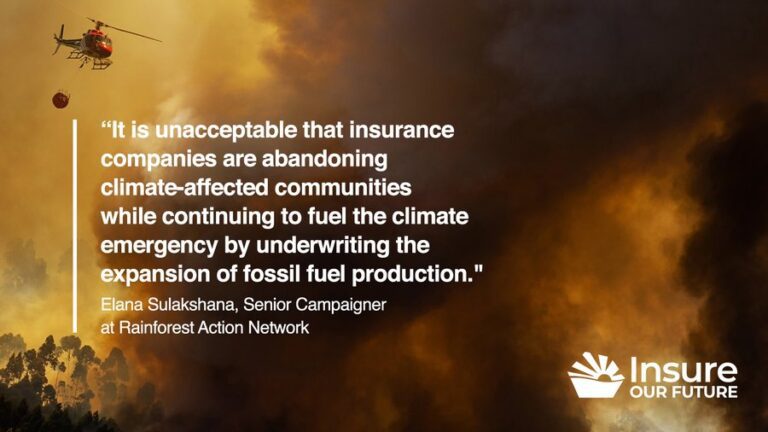
“So far, there hasn’t been real regulatory pressure. And there hasn’t been market pressure … as in the short term, it’s still a profitable business. So we think public pressure has really made an essential difference”
- Lindsay Keenan, Insure Our Future (the Guardian)
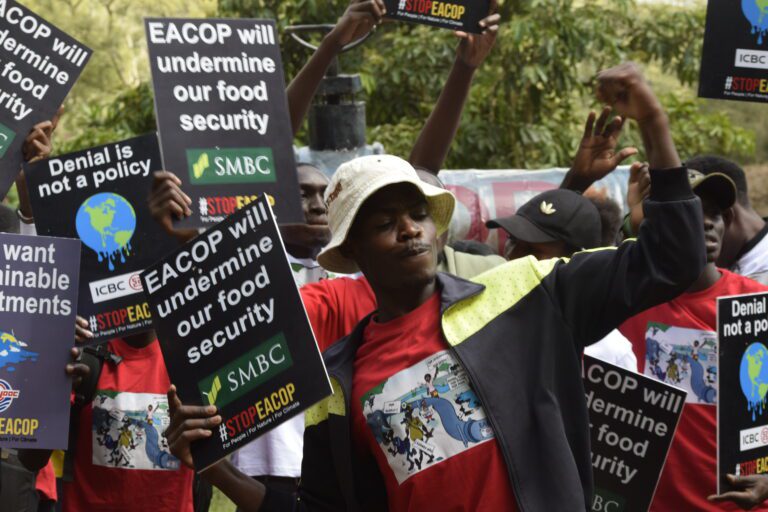
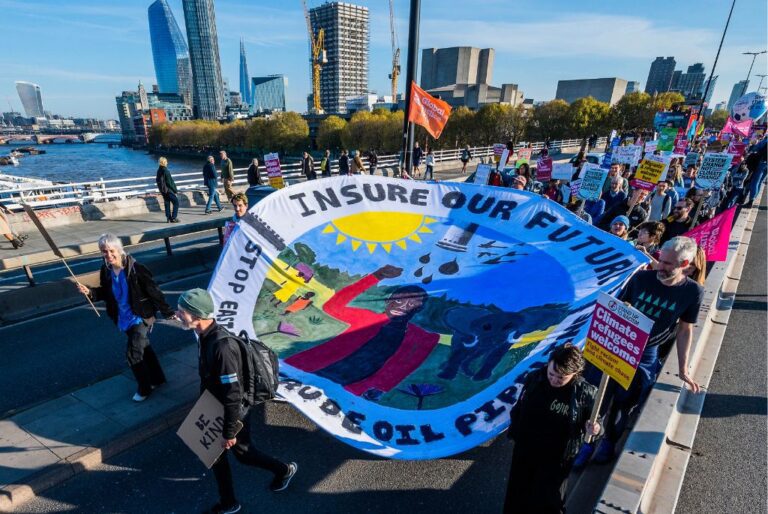
As part of the StopEACOP Coalition, we've been mobilizing to persuade insurers at Lloyds of London to drop the contraversial East Africa Crude Oil Pipeline.
Not only does this make the pipeline harder to finance, it also informs insurance companies about the damaging impacts of oil and gas pipelines, and is part of the movement to shift the whole industry away from fossil fuels.Sign up here to commit taking regular action with us - it's easy to do from home!