Legal challenge against Cumbrian coal mine heard in court
Case against proposed mine in Cumbria heard in court
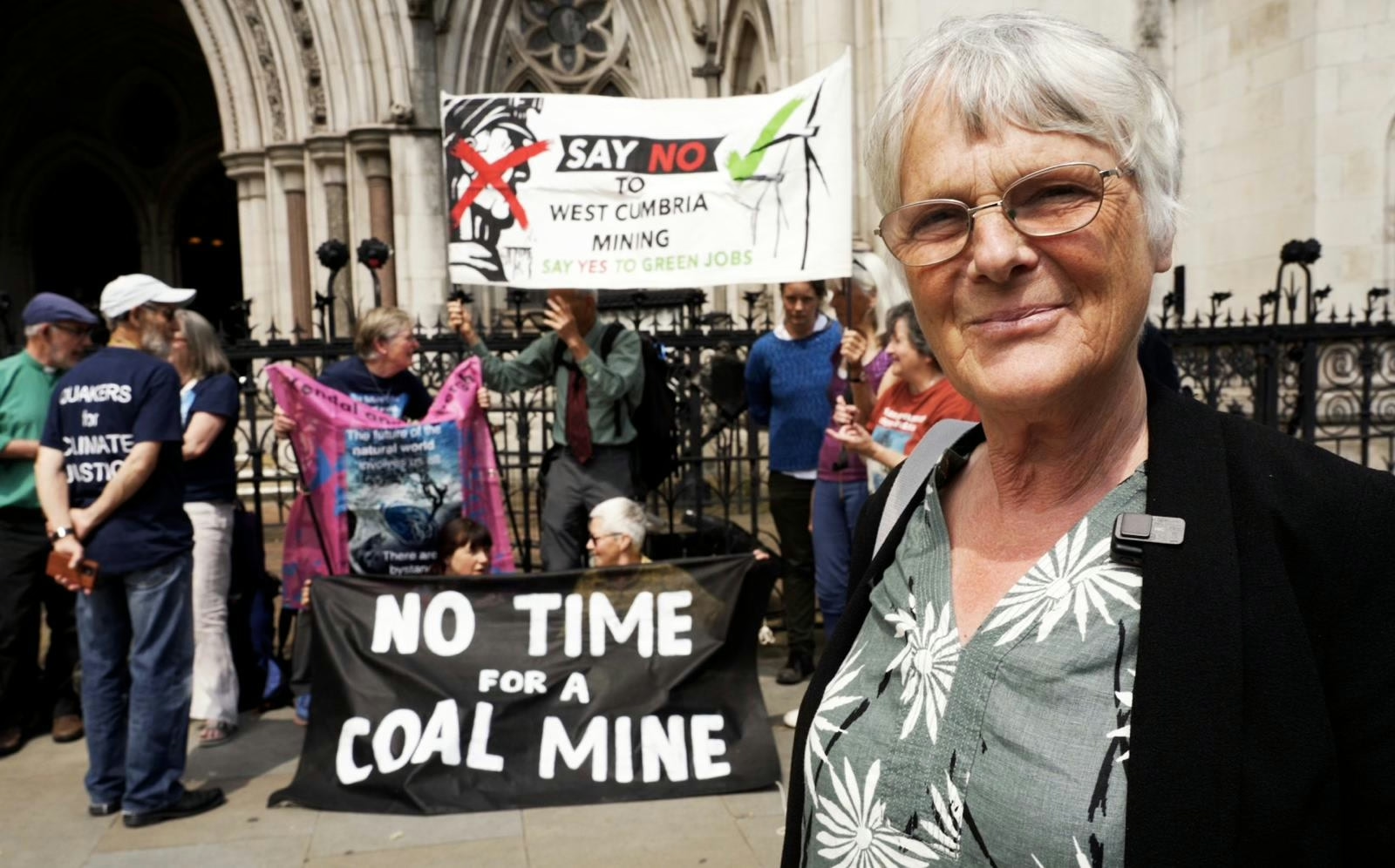
From Tuesday 16th July to lunchtime 18th July, Lord Holgate heard the case, brought by South Lakes Action on Climate Change and Friends of the Earth, against the Government’s 2022 approval of a new underground coal mine at Whitehaven.
In the preceding week the new Government accepted the decision of the former Government was legally flawed, and has conceded the legal challenges to the approval. A Barrister representing the new Secretary of State, Angela Rayner, was present on the request of the Judge, but made no submissions.
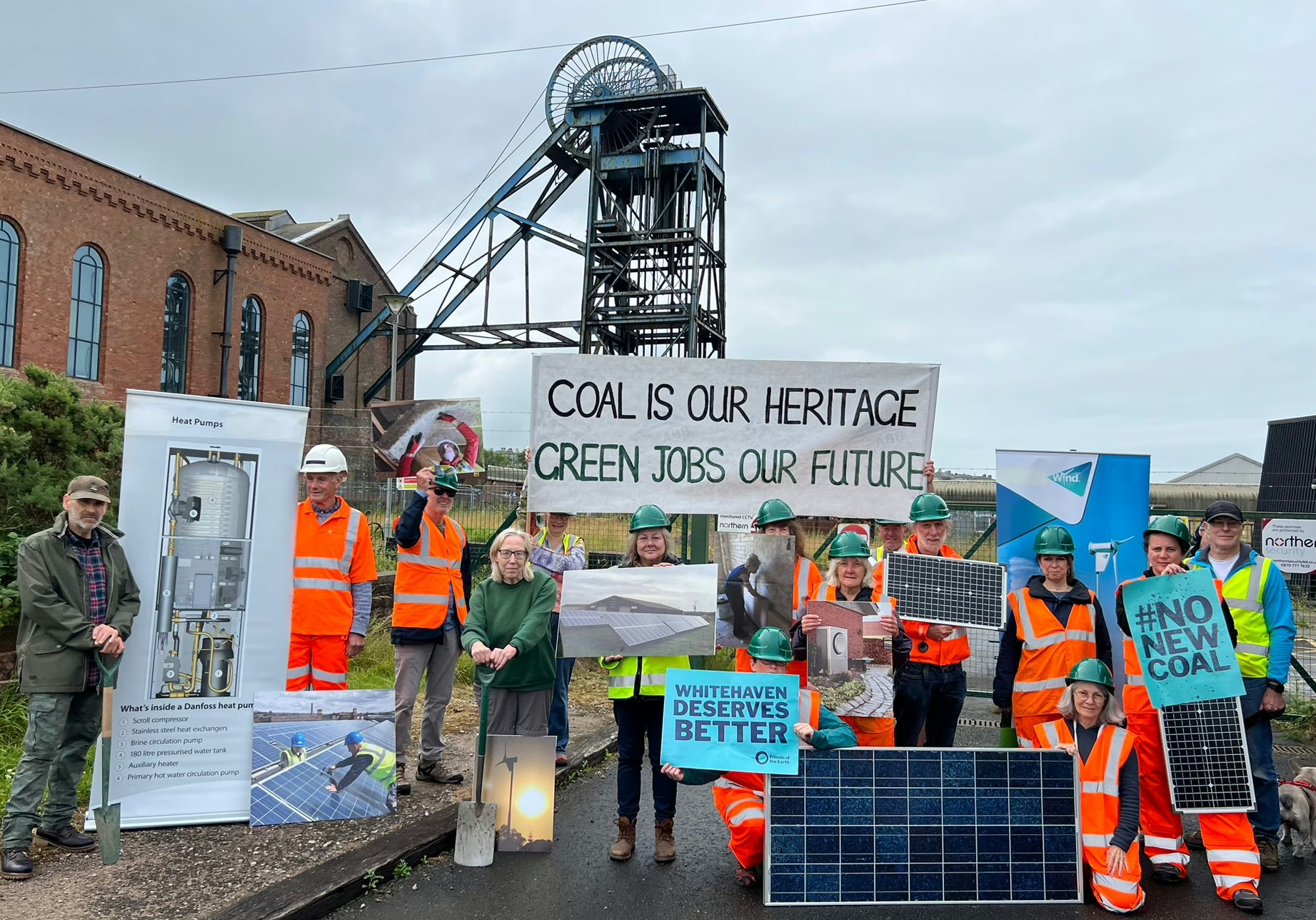
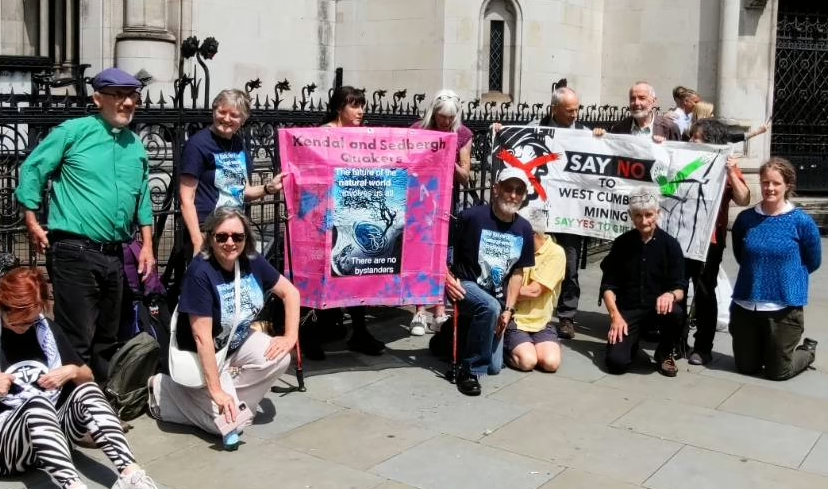
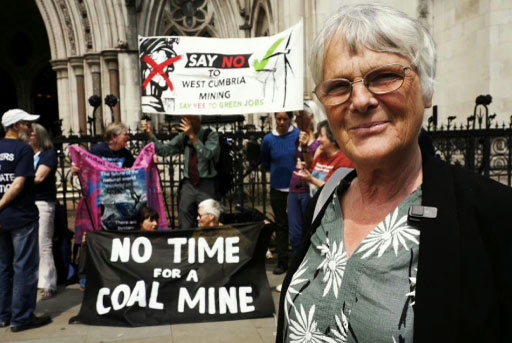
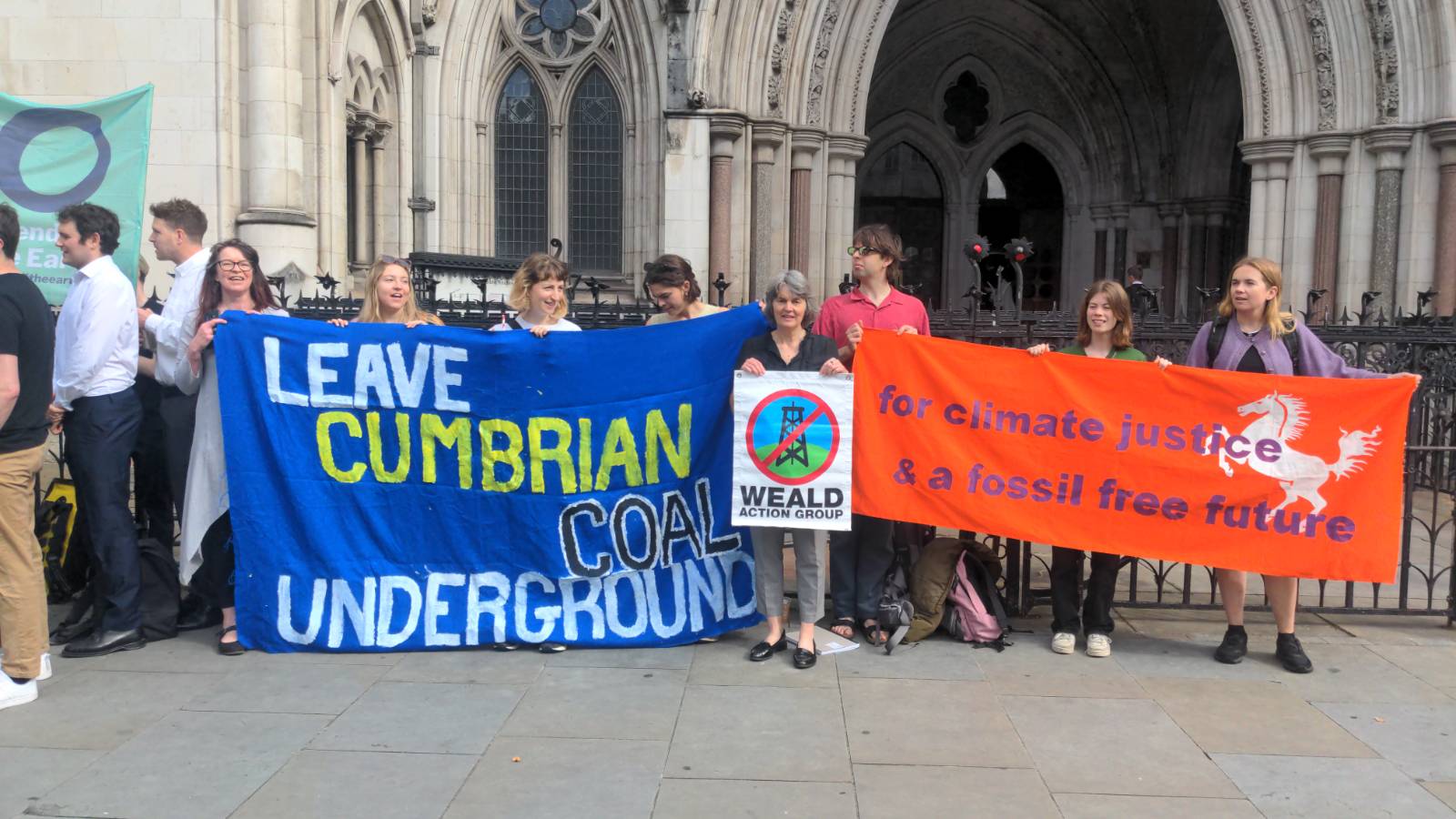
Demonstrations in support of the court case were held in Whitehaven on the evening before the case began and on the first day of the hearing. In London, there was a demonstration before the start of the case, outside the High Court and a meeting of Quakers at lunch on the second day.
Estelle Dehon KC of Cornerstone Barristers representing South Lakes Action on Climate Change and Friends of the Earth’s Barristers as to why the mine should not have been granted permission. This was based on the lack of consideration of emissions on use of the coal (the Finch case precident); errors in the Environmental Statement; the false argument that coal mined in the UK, means less mining abroad; failure to comply with the 6th carbon budget; and inconsistency of treatment of parties in the planning inquiry.
The Judge, Lord Holgate had ruled against Sarah Finch at the High Court, before she won her case in the Supreme Court. The Finch case law was much debated during the hearing looking at the Whitehaven coal mine. It states that emissions from the consumption of fossil fuels should be considered when deciding planning applications for new fossil fuel production.
Barrister James Stratchan KC for West Cumbria Mining Ltd set forth its case that the coal from Cumbria would perfectly substitute for more expensive coal from the USA so overall there is no increase in emissions. This assumes that coal mines with permission to be extracted coal in the USA would chose to leave the coal underground in an equal measure to it is extracted from this site. He tried to argue that as this coal was coking coal normally used in coal power stations, and as such it shouldn't be considered as a fossil fuel and therefore sought to avoid discussing the recent Finch victory.
Lord Holgate engaged in detail with the points put before him, but is not expected to deliver a decision until after some weeks of deliberation. If the case is upheld the decision would then be returned to the Secretary of State for a fresh decision, a process which is also likely to take weeks or months and involve another public inquiry, which may be limited in scope.
We will let you know when we have a decision to report on.